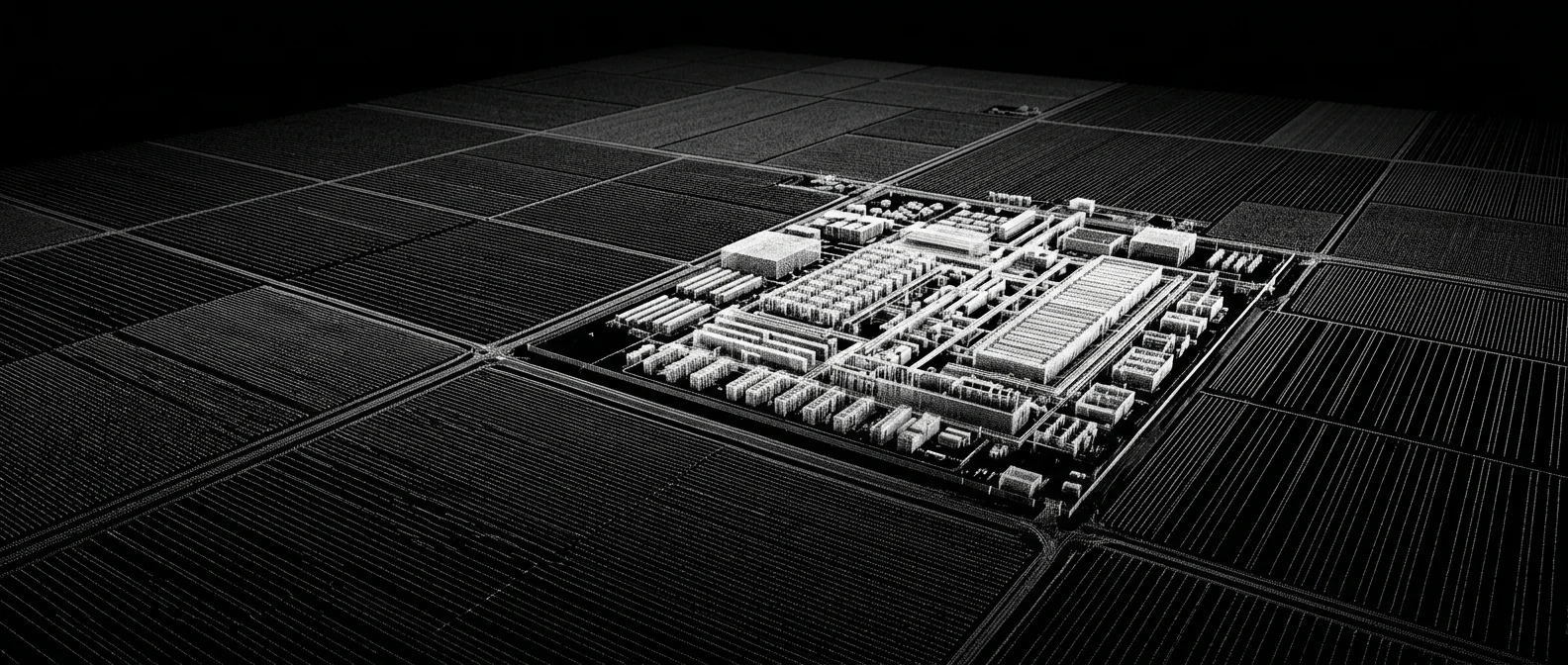
Nobles County rejects a $4 billion Geronimo data center as rural zoning codes halt gigawatt-scale infrastructure
The 959-acre project would have consumed up to a gigawatt of power, highlighting the growing friction between agricultural preservation and hyperscale development.

The friction between hyperscale infrastructure and local land use has reached the county zoning board. Nobles County, Minnesota, voted against a text amendment that would have permitted Geronimo Power to develop a $4 billion data center on agricultural land, effectively killing the project in its current form. The decision marks a structural ceiling for infrastructure developers attempting to site gigawatt-scale facilities in rural corridors without explicit industrial zoning.
The mechanism of refusal was administrative rather than environmental. Geronimo Power sought to include data centers as a conditional use under the county's agricultural preservation designation for a 959-acre parcel near the Iowa border. By voting against the amendment, local commissioners signaled that the economic gravity of hyperscale development is no longer sufficient to override established agricultural zoning. For the past decade, the standard playbook for data center expansion relied on identifying cheap, flat land near robust power routes, assuming local governments would rubber-stamp variances in exchange for tax revenue. The Nobles County vote suggests that playbook is losing its efficacy as the physical footprint of these facilities expands.
The scale of the proposed facility illustrates the widening gap between traditional commercial development and modern compute requirements. The eight-building complex would have spanned 2.5 million square feet and drawn between 400 megawatts and one gigawatt of power. Geronimo, which operates more than two gigawatts of renewable capacity and holds a 20-gigawatt development pipeline, intended to prepare the site for an unnamed end-user. That scale of power draw — equivalent to the peak demand of a mid-sized city — requires contiguous land parcels that are increasingly difficult to assemble outside of protected agricultural zones.
The winners in this administrative friction are established data center hubs where industrial zoning is already codified, and the incumbent operators whose existing facilities gain premium value as new supply faces local headwinds. The losers are developers like Geronimo attempting the build-to-suit model in greenfield territories, and the hyperscalers whose capacity projections assume friction-free land acquisition in the American Midwest. Also losing out are local municipalities that might have benefited from the associated tax base but are politically constrained by constituents who view 959-acre concrete footprints as incompatible with long-term soil preservation.
What this rejection forecloses is the assumption that rural counties will universally welcome gigawatt-scale infrastructure as a default economic boon. What it opens is a more contested phase of data center expansion, where the primary bottleneck shifts from securing power generation and silicon to navigating the municipal zoning codes of the American agricultural belt.