Meta secures one gigawatt of orbital power capacity as Overview Energy targets geostationary beaming
The social media giant’s latest power purchase agreement bypasses terrestrial grid constraints by targeting near-infrared transmission from 35,786 kilometres up.

Thirty-five thousand, seven hundred and eighty-six kilometres of altitude is the physical requirement to keep a solar array in near-constant illumination. It also dictates a launch mass penalty that has historically rendered space-based solar power economically unviable. From that geostationary orbitA circular orbit 35,786 kilometres above the Earth's equator where a satellite's orbital period matches the planet's rotation, allowing it to remain fixed over a single ground location., Overview Energy intends to beam one gigawatt of power back to Earth under a newly signed off-take agreement with Meta. The deal shifts the tech sector’s search for base-loadThe minimum continuous level of electricity demand on a grid over a 24-hour period. Historically served by large coal or nuclear plants, and increasingly a bottleneck for 24/7 AI data centers. data centre power off the terrestrial grid entirely, treating orbital mechanics as a solution to local zoning constraints.
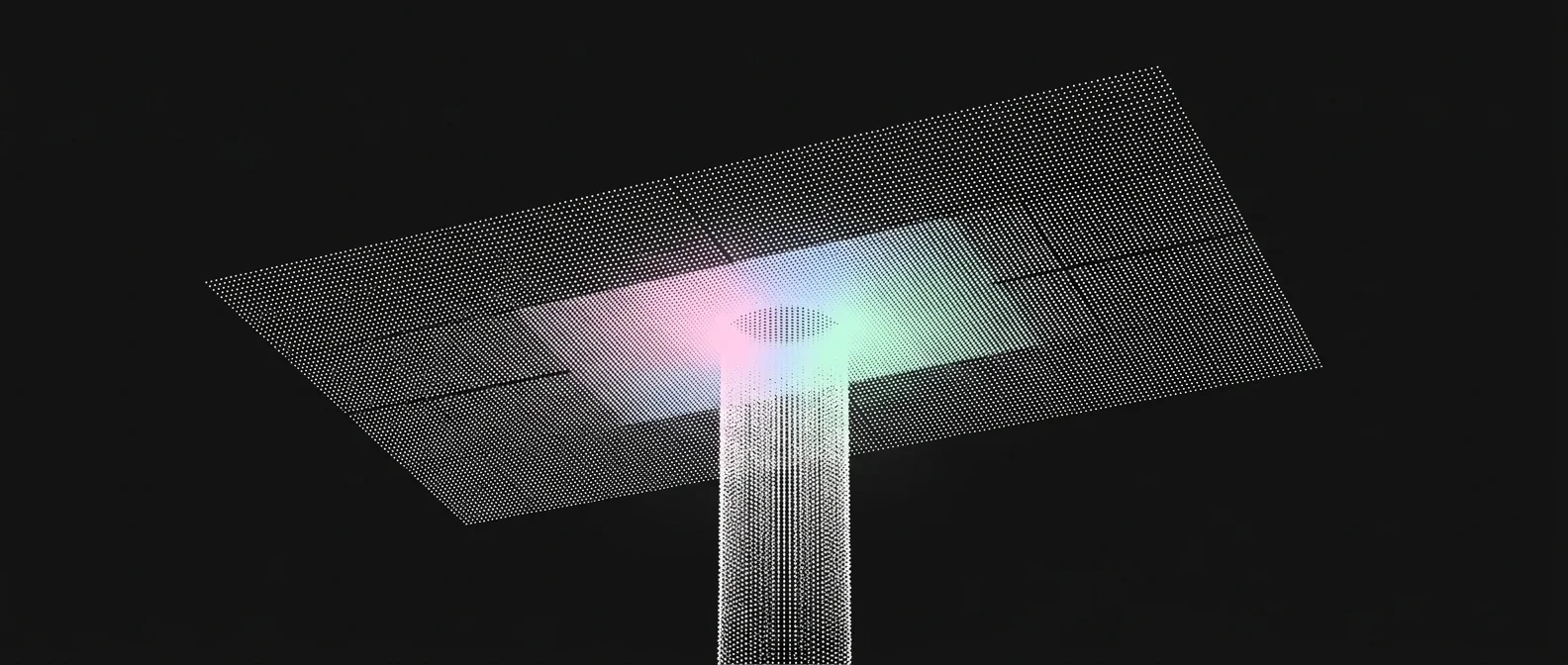
The mechanism relies on extending the duty cycleThe fraction of time a machine or system is actively operating. In electric motors, a continuous peak duty cycle means running at maximum output without rest periods for cooling. of existing ground infrastructure. Rather than building dedicated microwave rectennasSpecialized receiving antennas used to convert electromagnetic energy, such as microwaves, directly into direct current electricity.—the traditional, land-intensive approach to space-based solar power—Overview plans to transmit energy using near-infrared light. This specific wavelength allows the orbital constellation to target standard photovoltaic farms on Earth, effectively illuminating terrestrial solar panels after local sunset. For data centre operators, the arrangement promises a twenty-four-hour solar base-loadThe minimum continuous level of electricity demand on a grid over a 24-hour period. Historically served by large coal or nuclear plants, and increasingly a bottleneck for 24/7 AI data centers. without the corresponding requirement for grid-scale battery storage or new high-voltage transmission corridors.
The operational timeline narrows over the next four years. Overview demonstrated the optical beaming hardware on a Cessna aircraft flying at 16,500 feet last November, but the atmospheric attenuation and pointing variables scale non-linearly in the vacuum of space. A low Earth orbit demonstration flight is scheduled for 2028 to validate the thermal management and targeting systems, followed by the targeted commencement of commercial geostationary delivery in 2030. For Meta, which recently secured 6.6 gigawatts of terrestrial nuclear capacity, the one-gigawatt orbital agreement represents a direct hedge against the physical limits of regional power grids.
The immediate winners in this architecture are the owners of existing solar installations, whose capital assets could suddenly generate revenue during the night without additional land acquisition. It also provides a dedicated anchor tenant for heavy-lift launch providers, as the collector arrays required for geostationary power generation will demand unprecedented payload volumes. The losers are regional transmission operators and terrestrial battery manufacturers, whose long-term economic models assume that solar generation fundamentally requires buffering and grid-level balancing.
What this agreement forecloses is the assumption that the artificial intelligence sector’s energy demands are strictly bound by terrestrial land use and local grid interconnection queues. What it opens is a fundamentally new operational regime for satellite manufacturing, where the payload’s primary export from orbit is no longer telemetryThe automated collection and transmission of data from remote or inaccessible sources to an IT system in a different location for monitoring and analysis. or communications data, but raw industrial power delivered directly to the point of consumption.