Pentagon allocates $3.2 billion for Golden Dome space interceptors as traditional primes split the architecture with orbital servicing startups
The Space Force distributed twenty prototyping contracts across twelve vendors, targeting an initial operational capability by 2028 that relies heavily on commercial off-the-shelf intercept dynamics.

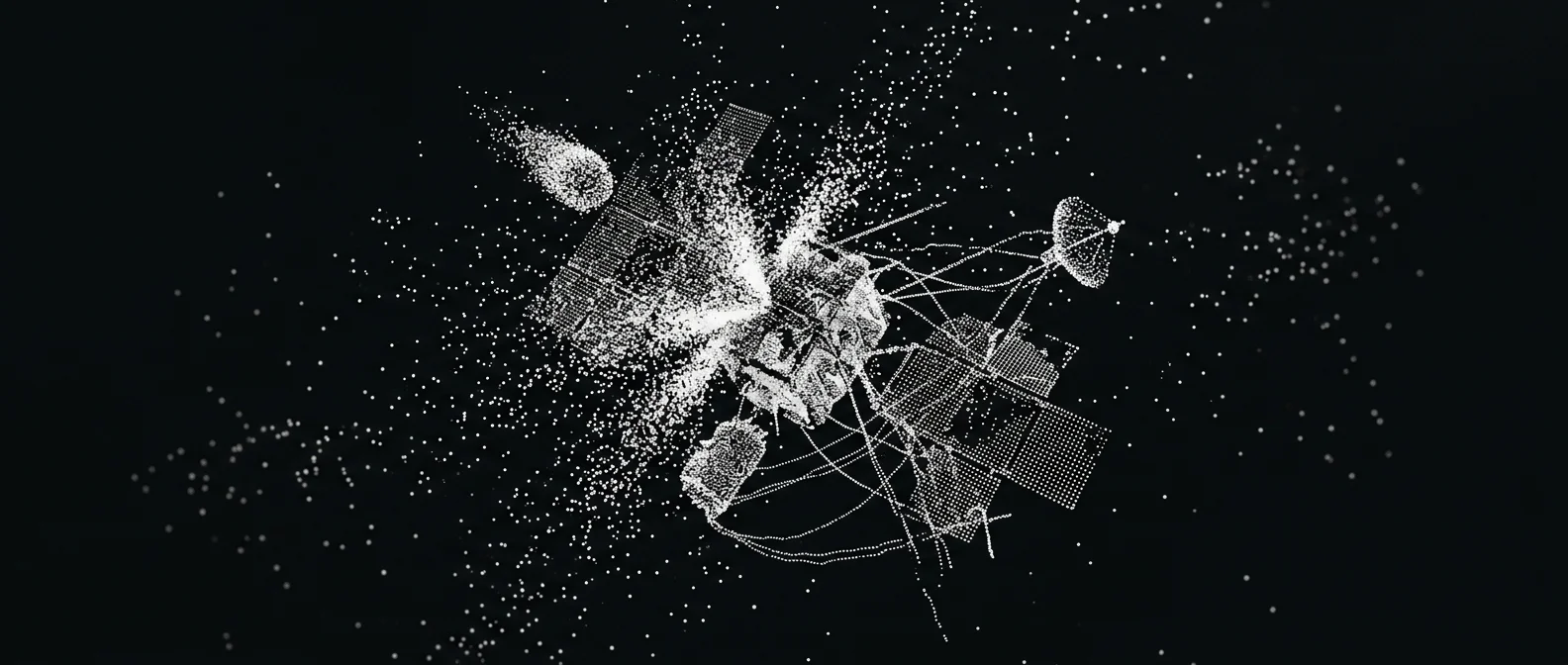
A kinetic intercept in low Earth orbitAn Earth-centered orbit with an altitude of 2,000 kilometers or less, where most crewed spaceflight and satellite constellations operate. requires hundreds of metres per second of delta-VA measure of the impulse needed to perform a maneuver in space, representing the change in velocity required to shift from one trajectory to another. in the terminal phase alone, a physical constraint that defines the architecture of the Pentagon’s newly funded orbital defense tier. The Space Force has distributed $3.2 billion across twelve companies to prototype the space-based interceptor component of the Golden Dome system, officially shifting the missile-defense problem from ground-based silos to a distributed network of orbital assets.
The mechanism driving this deployment is the Other Transaction AuthorityA special contracting mechanism used by the US Department of Defense to bypass standard federal procurement regulations, allowing for rapid commercial prototyping and acquisition. contracting model, which bypasses traditional multi-year procurement cycles to pull commercial space capabilities directly into the defense stack. Twenty separate awards were quietly issued between late 2025 and early 2026 by Space Systems Command. By breaking the intercept architecture into discrete technical problems—sensing, targeting, and the physical kill vehicle itself—the Pentagon is forcing a modular approach to a system that must demonstrate an initial operational capability by 2028.
The vendor list bridges the legacy defense base and the commercial space sector. Lockheed Martin, Northrop Grumman, and RTX Raytheon anchor the traditional systems integration, while SpaceX, Anduril, and True Anomaly provide the commercial orbital buses and autonomous command layers. Smaller robotics and logistics firms like GITAI and Turion Space indicate the specific mechanical requirements of the interceptors, which must loiter, maneuver, and eventually collide with targets at orbital velocities. To validate these systems, launch providers like Astra are actively pitching their small rockets as dedicated targets, aiming to drive launch volume through intercept testing.
The winners are the non-traditional space vendors—startups like True Anomaly, Turion, and Quindar—who have successfully translated commercial rendezvous and proximity operationsOrbital maneuvers in which two spacecraft intentionally approach each other and operate in close proximity, essential for satellite servicing, inspection, or kinetic interception. into prime defense contracts. The losers are the advocates of monolithic, exquisite defense satellites. The broader $151 billion Golden Dome architecture is increasingly being chopped into proliferated, attritableA defense design philosophy where systems are built cheaply and in such high volume that the loss of individual units is an acceptable operational cost. constellations that mirror commercial broadband networks, relying on volume rather than individual survivability.
What this procurement opens is a continuous, funded pipeline for kinetic orbital intercept technologies, effectively subsidising the commercial space-servicing sector under a national defense mandate. What it forecloses is the assumption that space-based missile defense would remain a theoretical study. The contracts are signed, the integration teams are forming, and the physical commitments for a 2028 orbital deployment have begun to narrow the option space.