Baird tracks 25 data center cancellations in 2025 as Maine weighs a statewide moratorium
A new research note documents a quadrupling of abandoned hyperscale projects, driven by a convergence of local opposition, 60-week switchgear delays, and utility gridlocks.

The structural ceiling for American data center expansion is no longer capital or silicon, but local permitting and physical grid capacity. According to financial services firm Baird, project cancellations across the United States more than quadrupled to 25 in 2025, up from six the previous year and just two in 2023. The shift marks the end of the frictionless buildout phase for artificial intelligence infrastructure, replacing it with a landscape where gigawatt-scale blueprints routinely fracture against municipal resistance, legislative bans, and supply chain realities.
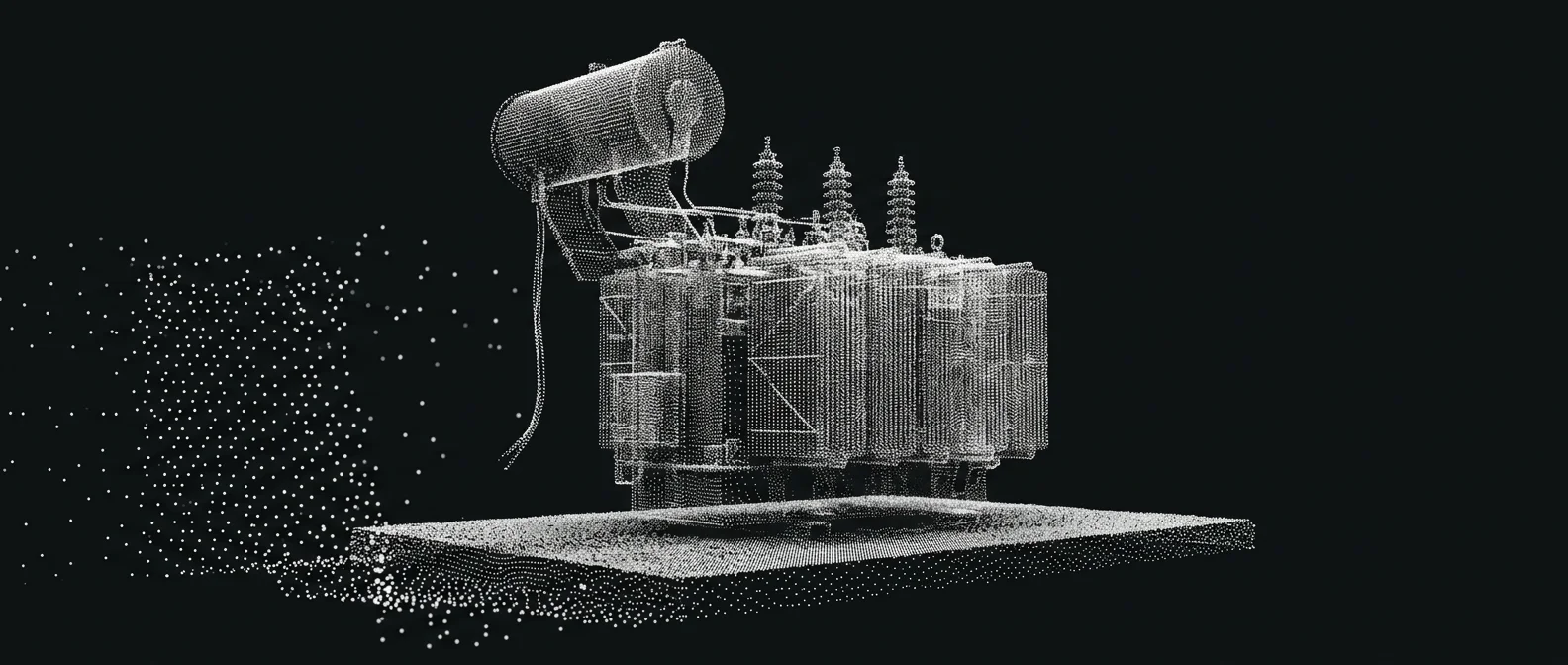
The mechanism driving the stall is a compounding failure of physical and political prerequisites. As standard lease sizes scale past the 1,000-megawatt threshold—a tenfold increase from the 100-megawatt benchmarks of just a few years ago—the infrastructure required to energize them has outstripped both utility planning cycles and equipment manufacturing. Medium-voltage switchgearThe combination of electrical disconnect switches, fuses, and circuit breakers used to control, protect, and isolate equipment in a power system. A critical bottleneck in data center supply chains., transformers, and heavy generators are currently running lead times of 40 to over 60 weeks. Developers like Miami-based Hut 8 note that while a facility's shell can be completed, the absence of onsite gear and firm utility delivery commitments leaves projects stranded and capital costs compounding.
The physical bottlenecks are now matched by organized political friction. Baird's research identifies at least 188 local opposition groups actively contesting data center developments across 40 states. The resistance has escalated from county zoning boards to state legislatures. In Maine, a bill that would block all new data center builds exceeding 20 megawatts until late 2027 is currently awaiting Governor Janet Mills' signature. In Virginia, developers recently abandoned a massive campus planned near the Manassas National Battlefield following sustained community pressure.
The winners in this constrained environment are contractors and developers holding sites with already-secured power agreements, who can now charge steep premiums for shovel-ready readiness. Incumbent hyperscalersMassive cloud computing providers that operate data centers at a global scale, predominantly Amazon Web Services, Microsoft Azure, and Google Cloud. Their infrastructure forms the physical backbone of the modern internet and artificial intelligence. also benefit indirectly, as the barriers to entry for new competitors rise sharply. The losers are the "neocloudA newer class of specialized cloud providers focused almost entirely on renting out high-performance GPUs for artificial intelligence workloads, competing against traditional hyperscalers." providers attempting to scale quickly, and the municipalities that banked on data center tax revenues without securing the necessary transmission upgrades to support them.
What this forecloses is the assumption that data center capacity can scale linearly with artificial intelligence compute demand. What it opens is a geographic realignment of the industry. As states like Maine consider outright moratoriums and traditional hubs like Virginia saturate, developers are being forced to hunt for stranded power in increasingly remote jurisdictions, fundamentally altering the topology of the American internet.