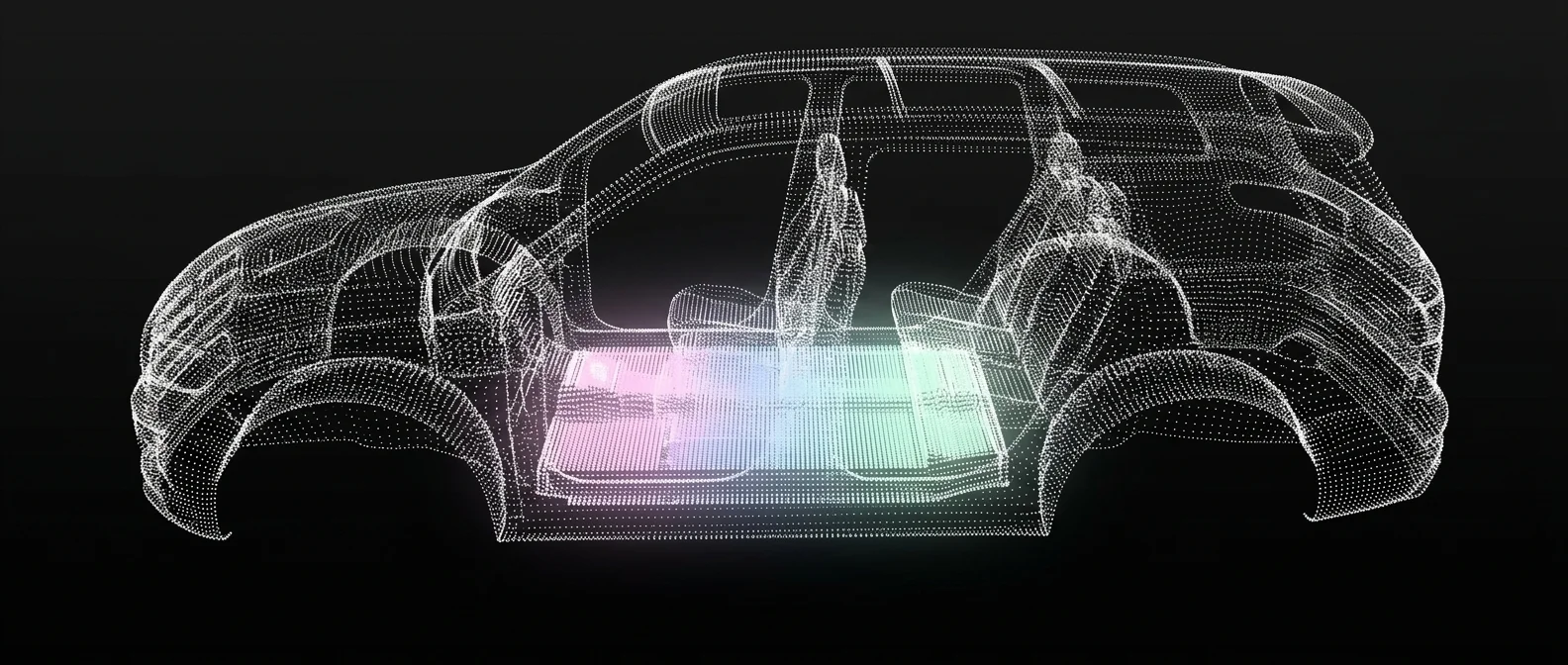
BYD logs 30,000 orders for the Datang SUV as five-minute flash charging shifts the megawatt burden to the distribution edge
The $36,500 three-row electric flagship pairs a 590-mile range with a charging protocol that treats passenger vehicles as sudden industrial loads.

Thirty thousand vehicles, each carrying a battery architecture capable of absorbing a five-minute flash charge, represents a localized load profile that most distribution feeders are entirely unprepared to support. BYD booked exactly that volume in twenty-four hours for its new Datang SUV over the weekend, pricing a three-row electric flagship at 250,000–320,000 yuan ($36,500–$47,000) and structurally altering the power draw of the consumer garage.
The commercial mechanism driving the volume is the total collapse of the premium electric vehicle margin. The Datang pairs a 950-kilometer (590-mile) CLTC range with the manufacturer’s Blade Battery 2.0 architecture, delivering high-speed navigation on autopilot and dual-chamber air suspension at a price point previously reserved for mid-market combustion crossovers. But the physical story is the charging protocol. A five-minute charge for a battery of this capacity requires peak draw rates that treat the passenger vehicle not as a slow-trickle overnight appliance, but as a sudden industrial load.
The sheer scale of the deployment forces the issue at the substation level. At 5.3 meters long and offering up to 585 kW (784 hp) in its dual-motor configuration, the Datang is BYD’s largest passenger vehicle to date. If even five percent of the initial 30,000 orders initiate a flash charge simultaneously during an evening commute window, the local dispatcher faces a sudden, unmanaged ramp obligation that easily eclipses the reserve margins of a medium-sized municipality. The transition from early-adopter trickle charging to mass-market flash charging fundamentally changes the physics of the distribution edge.
The winners are the battery chemistry teams who solved the thermal constraints of ultra-fast charging at scale, and the consumers accessing luxury-tier range for under forty thousand dollars. The losers are the local distribution operators — the municipal utilities and regional grid managers — whose neighborhood-level transformers were sized for a gradual, eight-hour overnight replenishment curve, not a five-minute burst of megawatt-class demand.
What this sales volume at this specific price point forecloses is the assumption that ultra-fast charging will remain a niche, tightly controlled feature of low-volume hypercars. What it opens is an immediate, physical mandate for behind-the-meterEnergy generation or storage systems located on the energy consumer's side of the utility meter. Because they do not draw from the public grid, they bypass transmission fees and interconnection delays. storage and buffered charging infrastructure. The raw generation capacity to power these vehicles exists, but the neighborhood copper connecting the substation to the driveway is no longer sufficient to carry the spike.