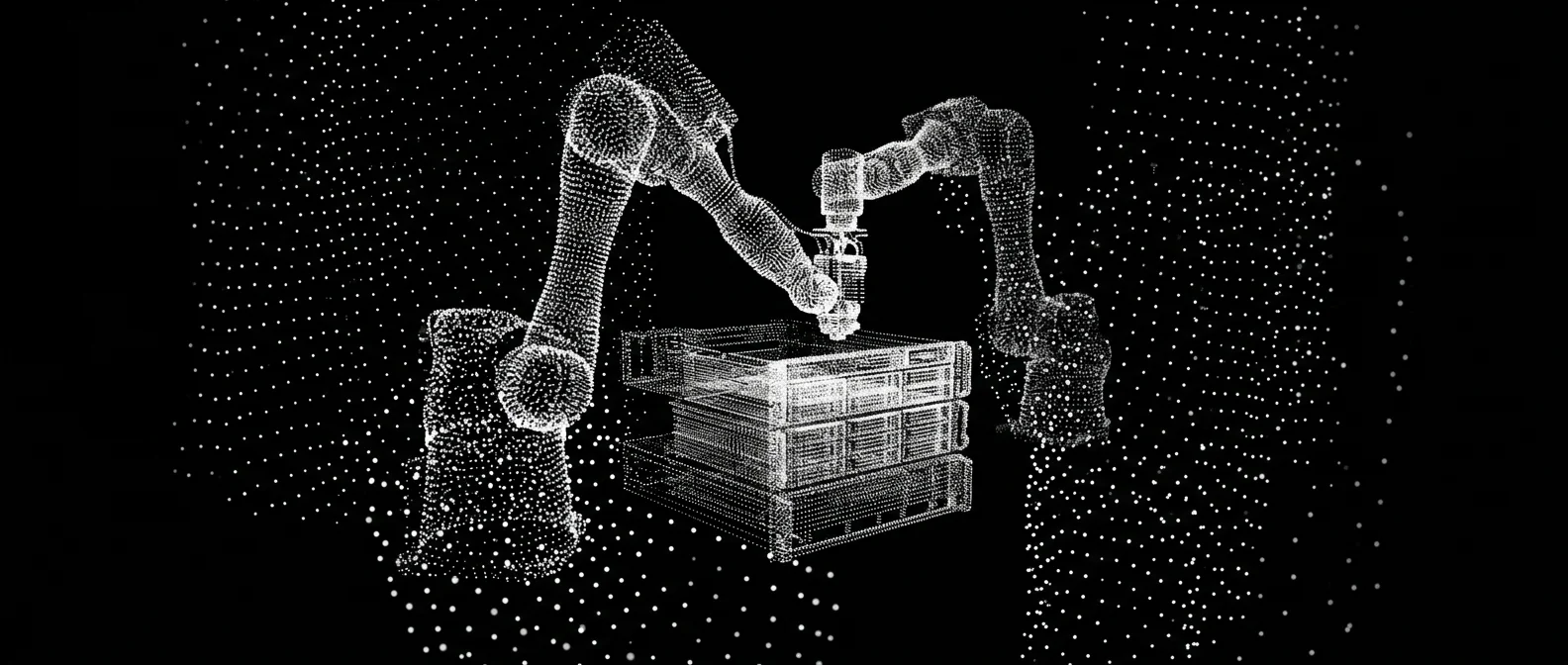
Flex deploys Teradyne robotics across 100 facilities as the contract manufacturer closes the loop on automation hardware
The electronics giant already builds Teradyne’s core robotic components. Now it is turning its own global footprint into a massive testbed for physical AI.

The boundary between the manufacturer of a robot and the operator of a robot has collapsed. Flex, the contract manufacturing giant that already builds the core electronics for Teradyne’s Universal Robots and Mobile Industrial Robots lines, is turning its own production floors into the deployment target. The expanded partnership shifts Flex from a component supplier to a primary testing ground, deploying cobots and autonomous mobile platforms across its global footprint to assemble data center infrastructure.
The mechanism is a closed-loop hardware cycle. On the floor of a high-mix assembly cell, a UR arm is not just placing a server chassis—it is logging end-effector positioning errors that inform the exact hardware revisions Flex will manufacture next quarter. By integrating Teradyne’s force-limited arms into its own facilities, Flex bypasses the integration friction that stalls industrial automation. They own the line, they build the robot, and they control the IT infrastructure that networks them.
The scale of the deployment provides an unprecedented dataset for physical AI. Flex operates more than 100 facilities across 30 countries, supported by 140,000 employees. The company manages roughly 80 percent of the critical power and compute requirements for global data centers. Injecting automated units directly into this pipeline means the control stack will be tested against the highest-volume, most complex electronics manufacturing environments on earth.
The winners are Teradyne and its subsidiaries, which gain a massive, captive deployment environment that accelerates their iteration cycles far beyond what standard customer pilots can provide. The losers are standalone robotics startups attempting to sell into the electronics manufacturing sector without a similar closed-loop manufacturing advantage. When the customer and the manufacturer are the same entity, the deployment friction drops to zero.
What this forecloses is the era of the isolated robotics pilot, where a manufacturer buys three arms and spends 12–18 months trying to integrate them into a legacy cell. What it opens is the industrialization of physical AI. When the factory building the robot is also the factory training the robot, the deployment curve shifts from a sales problem to a pure engineering constraint.