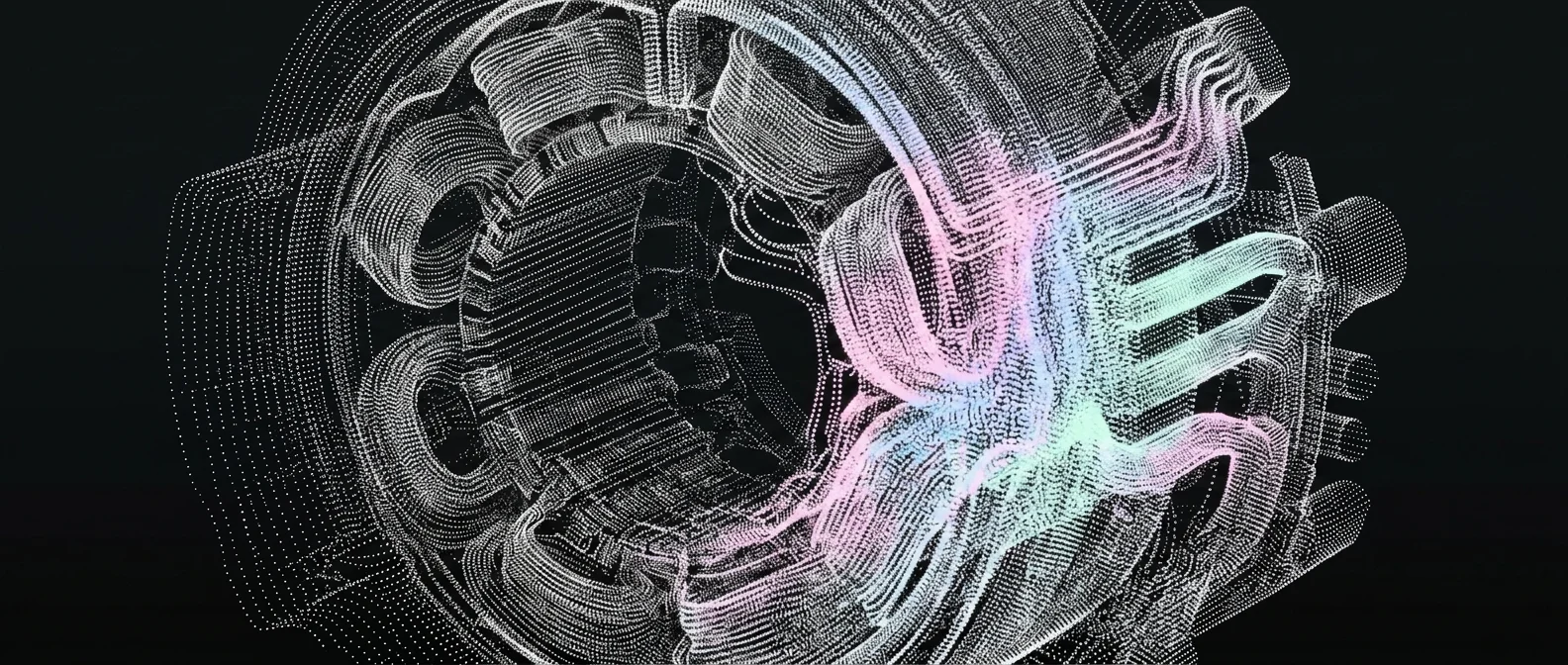


At the Marina, California pilot plant, the drive unit on the bench is not stamped from off-the-shelf automotive steel. It is machined from Permendur, a specialized cobalt-iron alloy that commands roughly ten times the premium of a traditional motor lamination. The stator is proprietary. The inverter is bespoke. The thermal management system is integrated to a tolerance of ±0.1 millimetres, designed to shed heat under a continuous peak duty cycle. I stood next to the assembly cell on a Tuesday afternoon as a technician torqued the housing bolts, watching the physical reality of electric flight take shape. There is no modularity here. This is what an electric power-train looks like when the penalty for a fault is gravity.
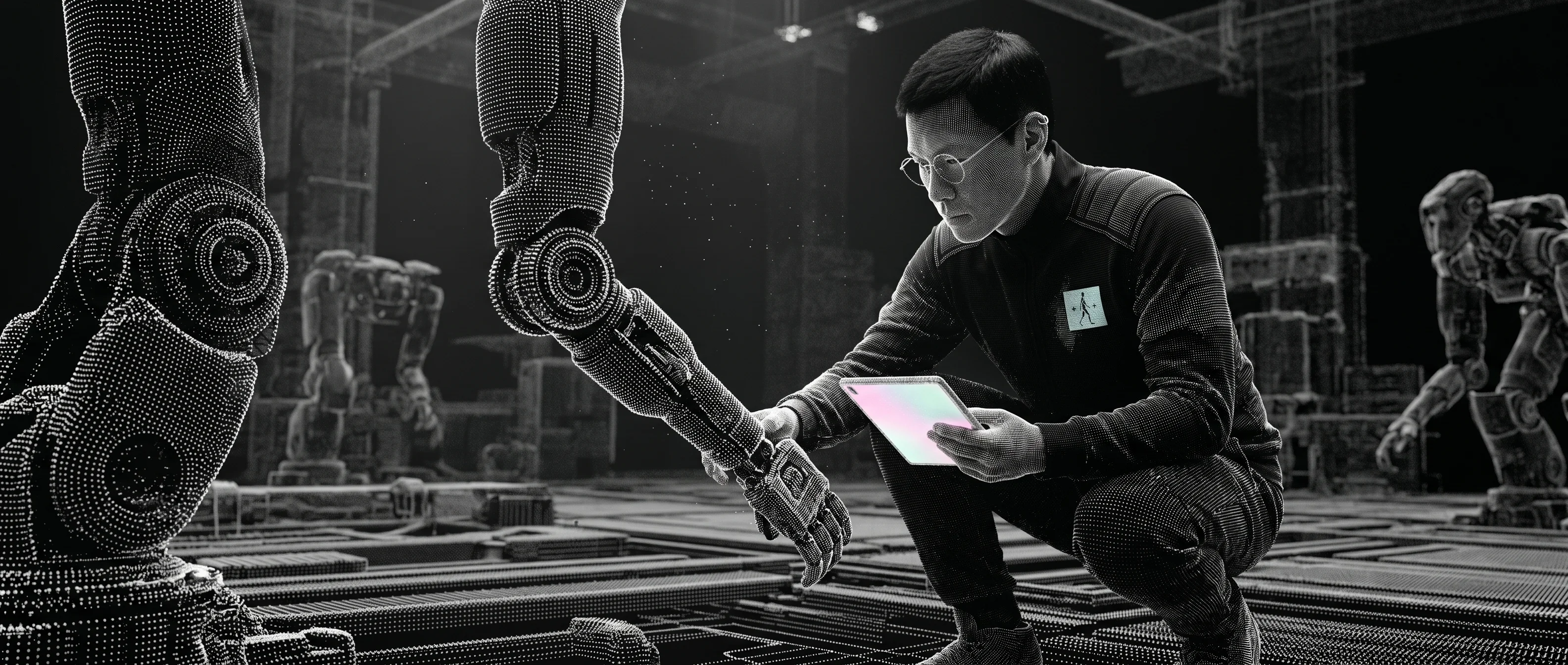
Across the field, a profound structural divergence is underway in how we build the bodies of machines. In one camp, the hardware is actively dissolving into a commodity. At a GXO logistics facility in Georgia last week, I watched an Agility Digit humanoid clear its hundred-thousandth material-handling cycle. The cell layout is aggressively mundane. The robot walks a fixed gait phase between a conveyor and a staging rack, functioning merely as an embodied endpoint for a higher-level orchestration system. Its end-effector positioning error is wide enough to absorb slight variations in the plastic bins. It is tracked by the same SAP Extended Warehouse Management software that monitors the facility's human-driven forklifts. When the penalty for a fault is a dropped tote, a recovery time measured in seconds by a floor manager, the chassis does not need to be a masterpiece. It just needs a predictable MTBF.
This is the bifurcation of the deployment curve. We spent the last decade assuming the automotive supply chain would provide a universal, modular parts bin for the next generation of robotics. That assumption is holding true on the ground. Chinese bipedal chassis are falling below $20,000, and Google is shipping Gemini spatial-reasoning brains explicitly designed to plug into any third-party frame. In Duisburg, Accenture and SAP are wiring humanoids into mobile inspection roles, treating the robot body as an interchangeable sensor platform. The cognitive stack is decoupling from the contact patch.
But in the air, the mass-to-cost ratio breaks the automotive model entirely. The traditional automotive industry relies on breaking a vehicle into discrete subsystems and outsourcing them to specialized Tier 1 suppliers. This drives down unit costs but introduces interface boundaries between components—a mass and efficiency penalty that a ground vehicle can absorb. An aircraft cannot.
A drive unit designed to fail safely by pulling over to the shoulder cannot be ported to an environment where the only acceptable failure mitigation is absolute hardware redundancy.
The handover seam—where the software policy meets the physical steel—now dictates the economics of the entire deployment. Waymo can raise $16 billion to double its vehicle production at its Mesa facility because a passenger car is a known physical quantity. The sensor pods are proprietary, but the underlying kinematics are utterly commoditized. Joby and its aerospace peers do not have that luxury. To claw back fractional efficiency gains, they are abandoning the Tier 1 supplier model. They are forced to swallow the capital expenditure of designing their own silicon and steel from scratch, accepting that their aircraft's payload capacity is strictly bound by how deeply they integrate the stack.
The near-term prospect of a commoditized “crate motor” for the eVTOL sector is foreclosed. The airframes of the new economy will not be built from catalogues of standardized parts. The winners in the warehouse will be the software vendors who can port their VLA models to the cheapest reliable legs, treating the robot body as an interchangeable tool. The winners in the sky will be the vertically integrated firms willing to own every bearing, every winding, and every heat sink.
On cycle fifty thousand, the bipedal warehouse worker will drift out of calibration across shifts 1–2 on a warm floor. Its vision system will fail to recognize a bin that came in three millimetres under tolerance. It will fault out, lock its joints, and wait for a technician to reset the cell—because the penalty for a fault is simply the maintenance cadence. The eVTOL drive unit will not have that luxury. It will keep spinning, wearing its expensive bearings against the sky, because it was built from ten-times-cost steel to ensure it never has the option to stop.