

Fifty-five to sixty hours is the turnaround margin between orbital deployments across SpaceX’s active launch pads. When first stage booster B1088 executed its fifteenth autonomous landing on a drone ship in the Pacific, it secured the fiftieth Falcon 9 mission of the year before the end of April. The operational metrics reflect an industrialised process rather than an experimental flight test regime. The thermal and structural margins of ascent are reliably managed across hundreds of flights. As a result, the vehicle spends progressively less time in the horizontal integration facility and more time waiting for payload readiness, range clearance, and acceptable weather windows.
The rest of the heavy-lift market is mirroring this compression to clear out its own broadband backlogs. United Launch Alliance just squeezed its Atlas 5 pad flow down to twenty-three days, pushing a 62.5-metre booster from the vertical integration facility to the pad and through propellant loading in a single morning. Arianespace is preparing to fly its Ariane 6 in a four-booster configuration to deliver 32 of Amazon’s Kuiper satellites at once, doubling its lift capacity from 10.3 tonnes to 21.6 tonnes. For both legacy providers, the technical hurdle is no longer the structural design of the rocket or the reliability of the core stage. It is the integration timeline required to process massive payloads on schedule without consuming the operational margins of the ground systems. The hardware works; the challenge is moving it out of the assembly tent fast enough.
The structural shift—the excess performance of these heavy-lift vehicles is now being actively traded to bypass orbital constraints. Viasat is burning Falcon Heavy’s surplus delta-V to push a six-tonne communications satellite to a 23,000-kilometre perigee, effectively substituting launch vehicle thrust for satellite lifespan. They are consuming the rocket’s margin to spare the payload’s electric thrusters from a slow, degrading climb through the lower radiation belts. When that high-energy drop-off closed nominally in simulation, it proved that launch capacity and satellite propulsion are now fully fungible assets. The shift from vertical to horizontal payload integration forces satellite manufacturers to design buses that can survive being tipped on their sides. The rocket dictates the terms of the payload’s structural engineering, not the other way around.
The constraint on placing twenty tonnes in low Earth orbit is no longer the thrust of the engines, but the physical bandwidth of the launch range.
The constraint on placing twenty tonnes in low Earth orbit (LEO) is no longer the thrust of the engines, but the physical bandwidth of the launch range. The secondary constraints are rapidly becoming primary. Radio frequency spectrum allocation, orbital slot management, and the sheer volume of space traffic control are buckling under the active mass being thrown into LEO. Launch providers are competing against an equilibrium where the primary friction point is no longer gravity, but the regulatory and physical limits of the Eastern and Western ranges. Every launch requires clearing commercial airspace, securing telemetry corridors, and managing the surface electric fields that dictate the weather board. As the launch cadence scales to fifty flights in a single quarter, the administrative and physical overhead of clearing the corridor becomes the primary limit on how much mass can leave the atmosphere.
As the Pentagon allocates $3.2 billion for its Golden Dome space interceptors, the architecture relies on proliferated, attritable constellations that mirror commercial broadband networks. These kinetic interceptors require hundreds of metres per second of terminal maneuverability, but before they can loiter in orbit, they must compete for the same finite launch windows as Amazon’s internet satellites and Meta’s orbital power arrays. When ULA shaved 76 hours off its pad reset at Space Launch Complex 41, it proved the workforce could surge to meet deployment deadlines. That specific accelerated flow closed nominally, keeping the 2026–2027 manifest on schedule. But surging a two-crew rotation through a tight RP-1 tanking window is a scheduling choice, not a sustainable baseline. The friction point for space-based infrastructure—whether it is a gigawatt of orbital solar power for Meta or a kinetic interceptor for the Pentagon—has entirely detached from the launch vehicle itself.
The rockets are ready for an industrialised cadence. They have amortised their manufacturing costs and proven their ascent profiles. But the ground systems—the radar tracking networks, the local airspace closures, the concrete piers—have not closed nominally. We are entering an era where the vehicle is the most reliable component of the orbital logistics chain, and the ground it launches from is the single point of failure. The transition from a developmental heavy-lift asset to a commercial workhorse is a brutal filter. It exposes the fragility of legacy ground assumptions that treated a week-long pad reset as a physical requirement rather than a scheduling luxury. If the commercial space sector is going to subsidise the defense stack and power the artificial intelligence data centres of the next decade, the ranges will need to operate with the same ruthlessness as the autonomous drone ships catching the boosters.
At T–0:15, the integration lead confirmed the pad was clear and said, on the loop, “we are go for terminal count.”

Arianespace integrates 32 Amazon satellites for Ariane 6 as the four-booster configuration shifts to operational cadence
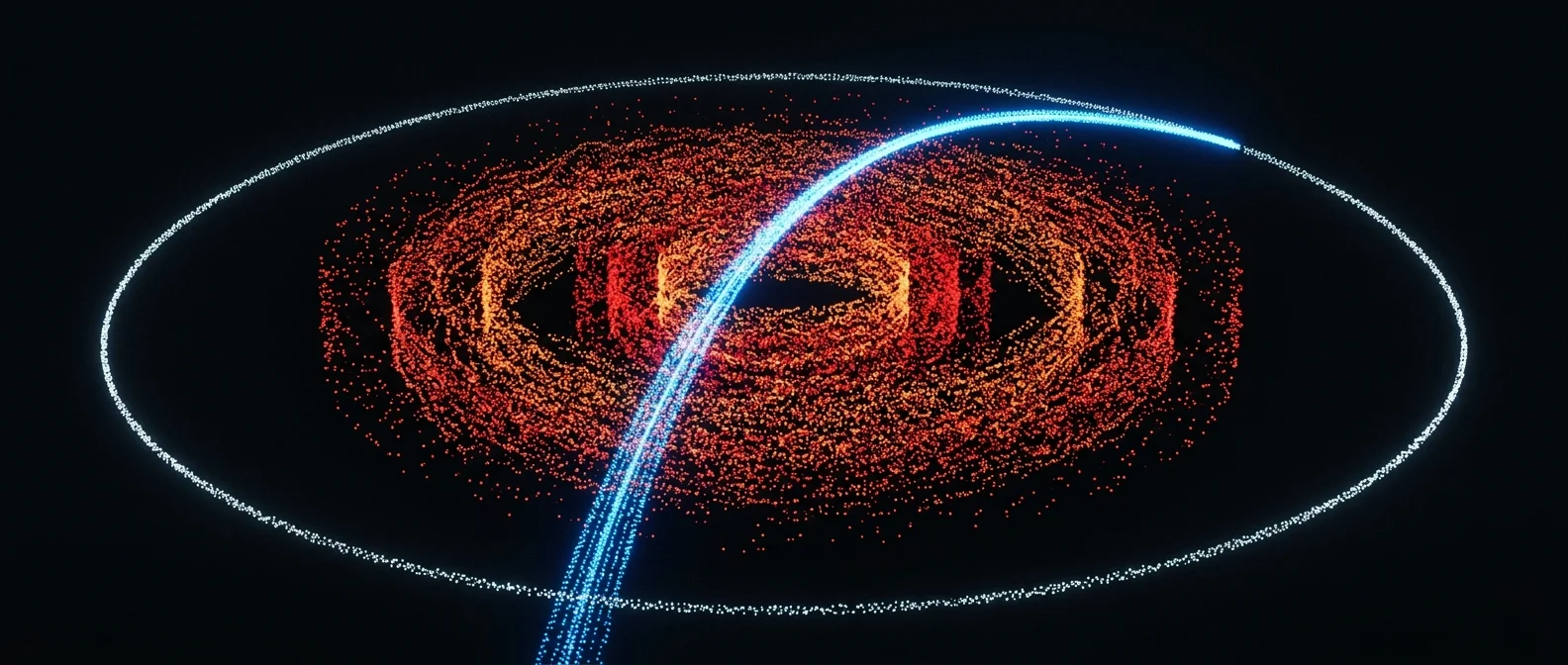
SpaceX holds the final ViaSat-3 on the pad as Falcon Heavy targets a high-perigee transfer orbit

ULA compresses Atlas 5 pad flow to 23 days as Amazon pushes 29 broadband satellites to orbit

SpaceX flies 25 Starlink satellites as the Falcon 9 cadence outpaces range infrastructure

Pentagon allocates $3.2 billion for Golden Dome space interceptors as traditional primes split the architecture with orbital servicing startups