QumulusAI secures $45 million for modular GPU deployment as tier-two clouds pivot to behind-the-meter gas
The alternative cloud provider aims to deploy 21,000 Nvidia Blackwell GPUs across prefabricated sites, bypassing multi-year grid interconnection delays.

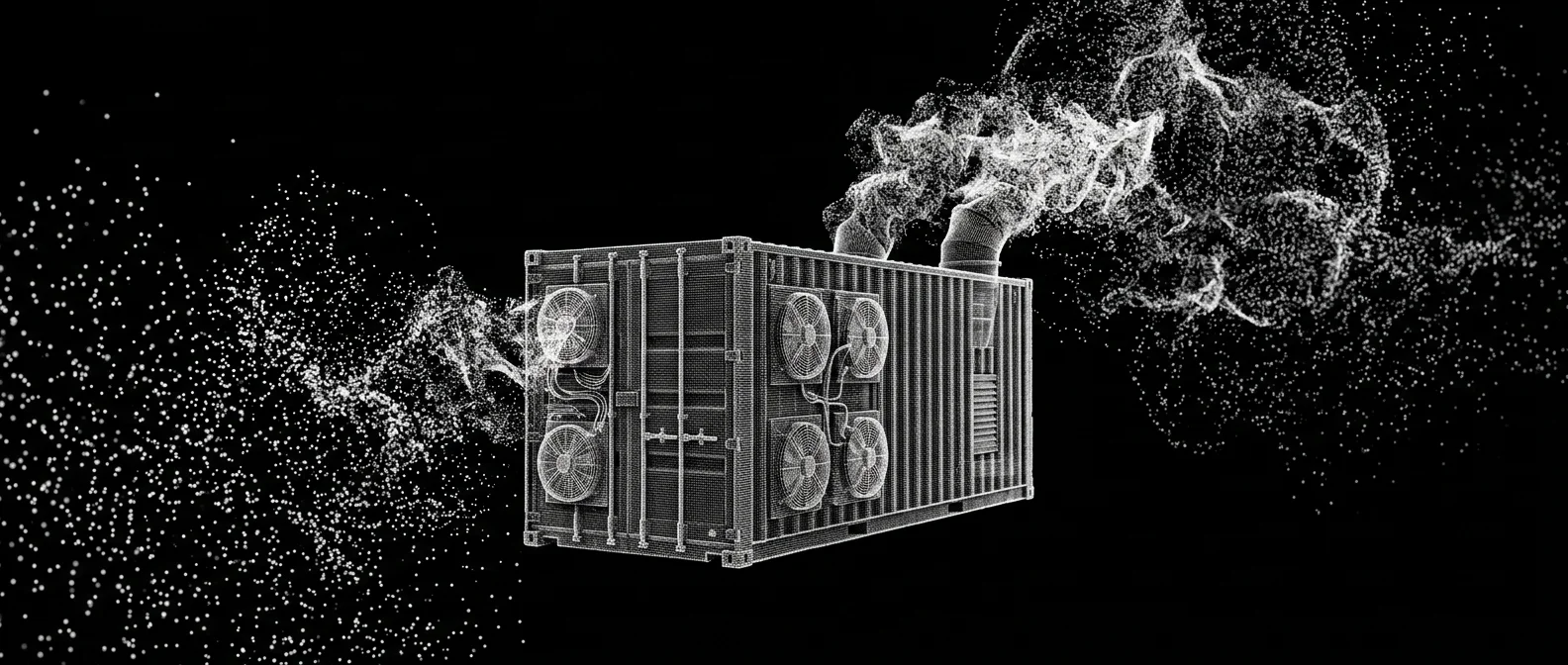
The bottleneck for AI infrastructure has definitively shifted from silicon allocation to power delivery, forcing tier-two cloud providers to bypass traditional utility queues entirely. QumulusAI’s $45 million convertible note facility, announced this week, is not notable for its absolute size, but for the deployment model it capitalizes: a distributed network of modular data centers running on behind-the-meterEnergy generation or storage systems located on the energy consumer's side of the utility meter. Because they do not draw from the public grid, they bypass transmission fees and interconnection delays. natural gas to circumvent multi-year grid interconnection delays.
The structural shift is one of geographic and operational fragmentation. While tier-one hyperscalersMassive cloud computing providers that operate data centers at a global scale, predominantly Amazon Web Services, Microsoft Azure, and Google Cloud. Their infrastructure forms the physical backbone of the modern internet and artificial intelligence. commit billions to gigawatt-scale nuclear facilities and utility-scale solar farms, mid-tier GPU providers are optimizing for speed over scale. QumulusAI is targeting the deployment of more than 21,000 Nvidia Blackwell GPUs throughout 2026. To power them without waiting for transmission upgrades, the company is securing modular sites—such as a recently approved four-acre, 20-megawatt deployment in Denton, Texas—designed to operate near existing substations or directly adjacent to independent gas infrastructure.
The financial engineering matches the physical infrastructure. The ATW Partners facility layers onto a $500 million blockchain-backed credit protocol secured late last year, explicitly designed to fund rapid procurement of B200, H200, and H100 hardware. By targeting a power usage effectivenessA ratio describing how efficiently a computer data center uses energy. A PUE of 1.0 means 100% of the power goes to computing equipment, with zero waste on cooling or lighting. (PUE) of 1.1 through prefabricated units and aiming for 100 megawatts of behind-the-meterEnergy generation or storage systems located on the energy consumer's side of the utility meter. Because they do not draw from the public grid, they bypass transmission fees and interconnection delays. natural gas, Qumulus isolates its unit economics from both public market volatility and regional grid pricing.
The winners in this realignment are the manufacturers of prefabricated data modules and the operators of stranded or mid-stream natural gas assets, who now have a direct monetization path for energy that cannot easily reach residential markets. The losers are traditional colocation providersCompanies that rent physical space, power, and cooling to other businesses for their servers and computing hardware, typically within large, centralized data centers., whose multi-year build cycles and reliance on standard utility interconnections are misaligned with the procurement velocity demanded by alternative GPU clouds.
What this deployment model forecloses is the assumption that the next generation of AI compute will be neatly centralized in massive, highly visible hyperscale campuses. What it opens is a shadow grid of high-density compute—tens of thousands of Blackwell GPUs distributed across municipal leases and gas tap-lines, operating entirely outside the traditional utility planning apparatus.